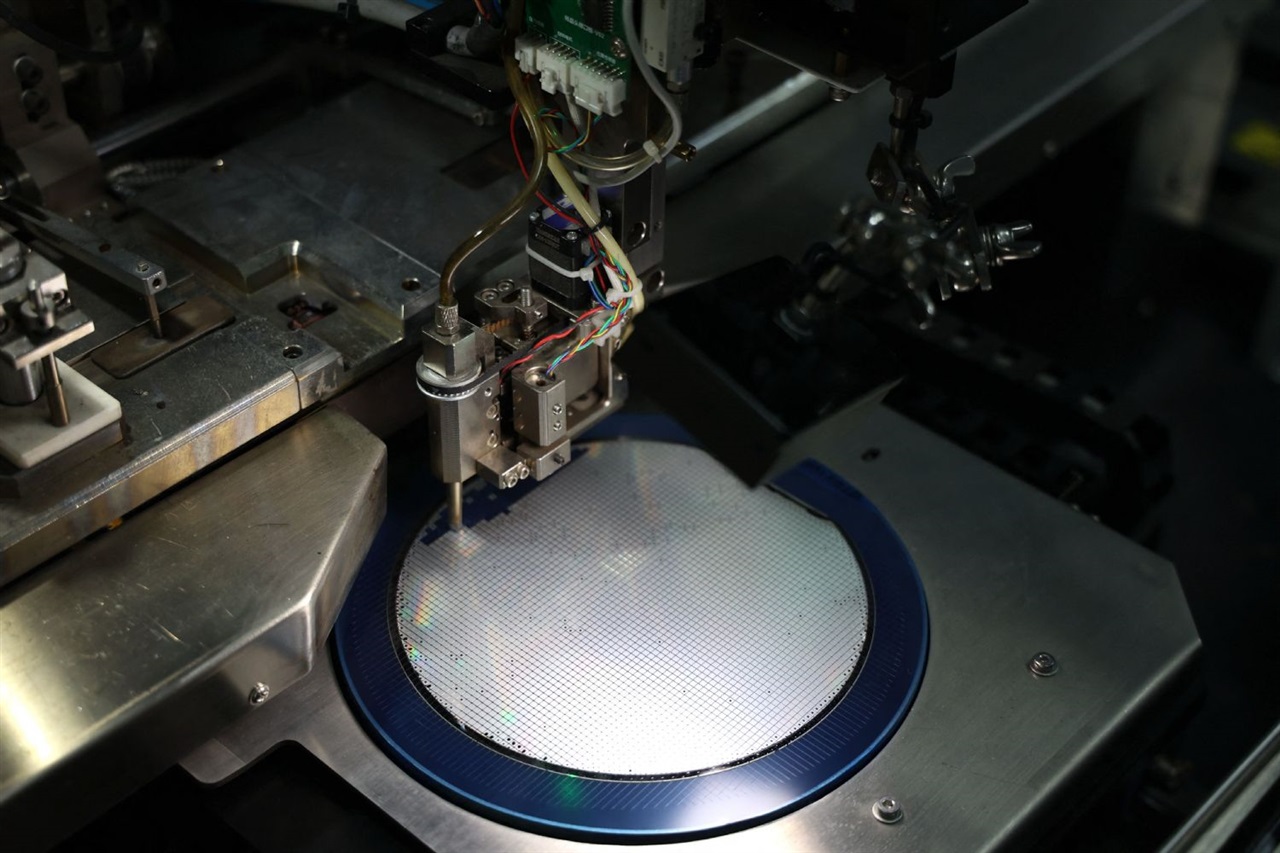
The exhibitor count for Semicon India 2026 reached 535, up 52% from a year earlier and 97% since 2024, with the fastest growth among cleanroom builders, specialty gas and chemical vendors, and metrology suppliers. That mix matters more than the headline number. When the crowd shifts from chip designers to the trades that fabs engage only once ground is broken, the story stops being about ambition and becomes about purchase orders. India has moved from the memorandum phase to the procurement phase.
Globally, this reshapes where the semiconductor supply chain's marginal dollar lands. For a decade the equipment and materials tier optimized around Taiwan, Korea, and increasingly the US CHIPS-era buildout. A credible third demand center changes routing decisions for gas logistics, chemical blending, and tool servicing that are inherently local and hard to ship across oceans. Pair this with Tata's roughly $7.4B, one-gigawatt AI data center commitment in southern India, and the picture is a country trying to own both ends of the compute stack: the silicon and the racks that run it. The binding constraint will be power, water, and skilled fab labor, not intent, and those are exactly the areas where the new exhibitors sell.
For Japanese companies, this is a rare demand-side tailwind that plays to structural strengths. Japan's leverage in semiconductors is concentrated in materials and equipment, photoresists, specialty gases, silicon wafers, and inspection tools, categories that map almost exactly onto India's fastest-growing procurement lines. Firms in this tier should treat India as a market requiring local service depth, on-site engineers, regional inventory, and joint ventures, not export-from-Japan economics. First movers who build that presence now will be embedded before pricing normalizes.
For SIers and Japanese enterprise IT, the read is twofold. India's data center expansion strengthens its hand as both an AI-capacity host and an engineering base, which pressures the offshore models many SIers still run as pure cost arbitrage. The more durable play is to position around fab-adjacent digital work, MES, yield analytics, and supply-chain traceability systems that new plants must stand up quickly. Japanese SIers with manufacturing-IT heritage have a genuine edge here, but only if they engage as India builds, rather than waiting for the facilities to finish and the integration contracts to be awarded to someone closer.