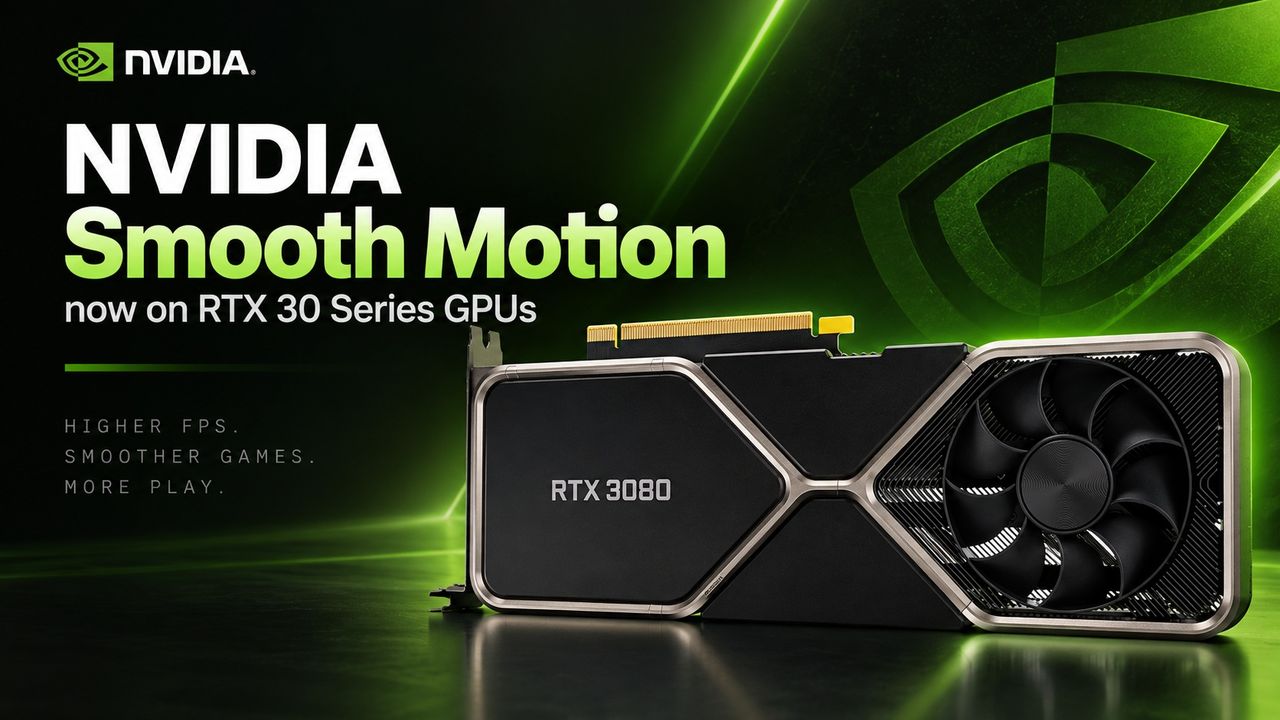
A developer has shipped an experimental mod, NVSmooth30, that enables NVIDIA's driver-level Smooth Motion frame generation on RTX 30 Series cards the company officially excludes. The technical fact is small; the strategic signal is not.
NVIDIA's segmentation strategy has long relied on tying software features to specific silicon generations, using AI-branded capabilities as the wedge that pushes upgrades. Smooth Motion, unlike DLSS Frame Generation, works at the driver level and needs no per-game integration — which is precisely why a hobbyist can graft it onto older hardware. When a lone developer demonstrates that a 'next-gen exclusive' runs acceptably on two-generation-old cards, it undercuts the narrative that these features are gated by physics rather than by marketing. That perception gap is the real risk to NVIDIA: not lost sales today, but erosion of the premium logic that lets it charge generation-over-generation upgrade prices.
Globally, this feeds a broader tension executives should watch. As AI becomes a software layer on top of general-purpose accelerators, the line between 'the chip can't' and 'the chip isn't allowed to' gets harder to defend. Regulators in the EU are already scrutinizing artificial feature-locking in other categories, and enterprise buyers negotiating GPU fleets will increasingly ask whether capability tiers reflect engineering or price discipline. Mods themselves carry security and stability risk and won't enter production stacks, but they shift the conversation.
For Japanese enterprises and SIers, the immediate relevance is less gaming and more capital planning around installed GPU estates. Japanese firms tend to run hardware on longer depreciation cycles than US hyperscalers, and datacenter and edge-inference deployments built on Ampere-class silicon remain widespread. The signal that older accelerators retain more usable capability than vendors advertise strengthens the case for squeezing more years out of existing fleets rather than chasing every refresh — a meaningful argument amid a weak yen that makes dollar-priced GPUs punishingly expensive to import.
For local development teams and RPA-adjacent automation vendors, the lesson generalizes: capability increasingly ships as software, and the useful life of hardware is defined by what the driver and model stack permit, not by the launch-day spec sheet. SIers advising clients on infrastructure roadmaps should build procurement recommendations around total capability over time, pressing vendors on which features are genuinely silicon-bound versus policy-bound. In a market where every yen of capex faces scrutiny, that distinction is becoming a board-level question rather than a technical footnote.