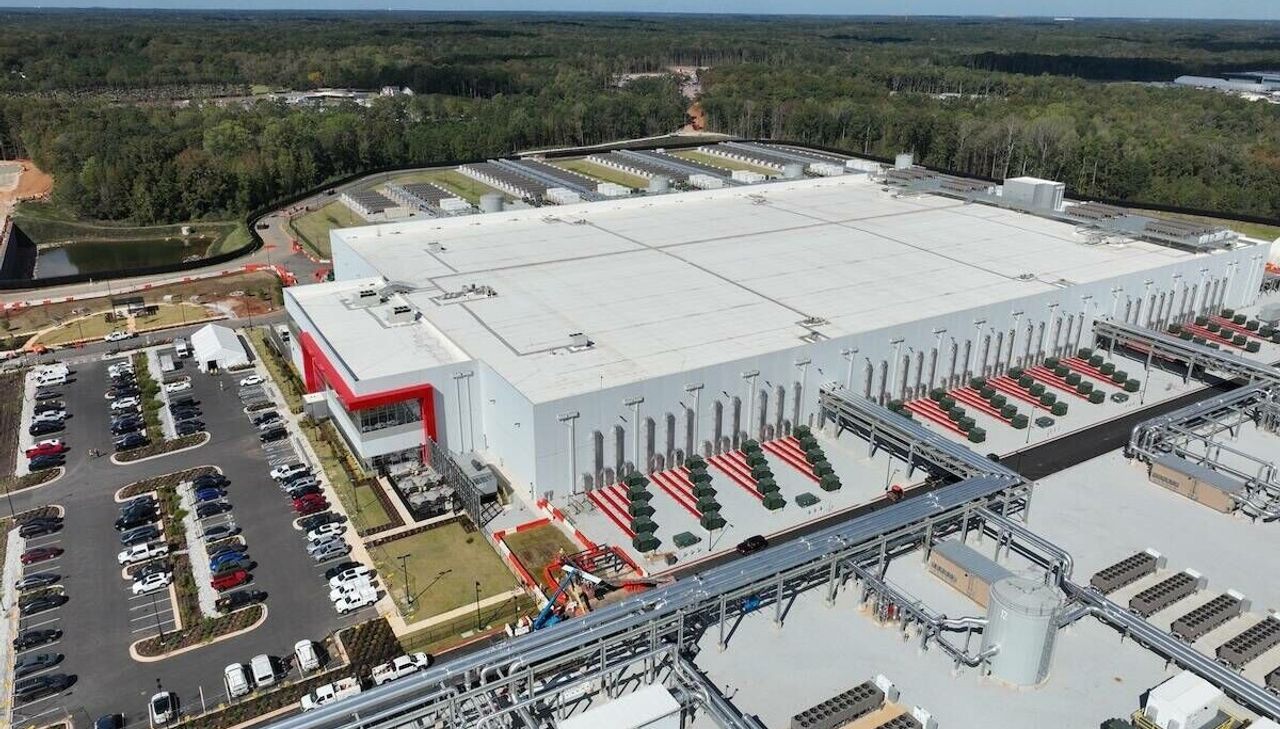
Tata Consultancy Services is putting roughly $7.4 billion toward a one-gigawatt AI data center in southern India. The number matters less than the identity of the builder: a systems integrator, not a hyperscaler, is now committing balance-sheet capital to physical compute at a scale that rivals cloud giants.
The strategic signal is a shift in where value accrues. For a decade, IT services firms lived on labor arbitrage and application delivery, renting compute from AWS, Azure, and Google. A gigawatt facility inverts that logic. TCS is betting that owning the substrate of AI workloads gives it pricing power, sovereign-data positioning for Indian government and BFSI clients, and a moat competitors who merely resell cloud cannot match. The constraint here is not silicon but power and grid access, which is precisely why southern India, with its energy availability and land economics, becomes strategically attractive. Expect capacity, not talent, to become the binding constraint on AI-services growth over the next three years.
The risk is real. A gigawatt of capacity demands utilization to justify the capex, and demand forecasts for enterprise AI remain volatile. If inference workloads consolidate onto a few frontier providers, a captive data center becomes a stranded asset. TCS is effectively taking a leveraged position on sustained, distributed enterprise AI demand.
For the Japanese market, this is a direct competitive shot at the domestic SIer model. Fujitsu, NTT Data, NEC, and the broader keiretsu-linked integrators have historically monetized headcount and long-term maintenance contracts, not owned infrastructure at frontier scale. TCS moving up the stack pressures Japanese firms bidding for the same global and pan-Asian enterprise accounts, where clients increasingly want an integrator that also controls sovereign, low-latency AI compute.
Japan's response is complicated by structure. Domestic power constraints, higher land and energy costs, and a fragmented data-center landscape make a unilateral gigawatt bet harder to execute here than in India. The more realistic path for Japanese SIers is partnership-led: co-locating with SoftBank, KDDI, or hyperscaler regions and differentiating on integration depth, regulatory fluency, and RPA-to-agentic-automation migration for legacy enterprise estates. The teams that win will reposition from staffing bodies onto projects toward orchestrating AI infrastructure and workloads. Those that keep selling person-month contracts will find TCS and its peers competing on a layer they never chose to own.